09 March 2011

100 Miles or More: Part Four

Eating is a two-faced, back-stabbing best friend. While it reminds you constantly with stomach groans and hunger pains that you need it to stay alive, it in turn wreaks havoc on your body in so many ways if you don’t do it properly.


March 8, 2011
Fat Tuesday


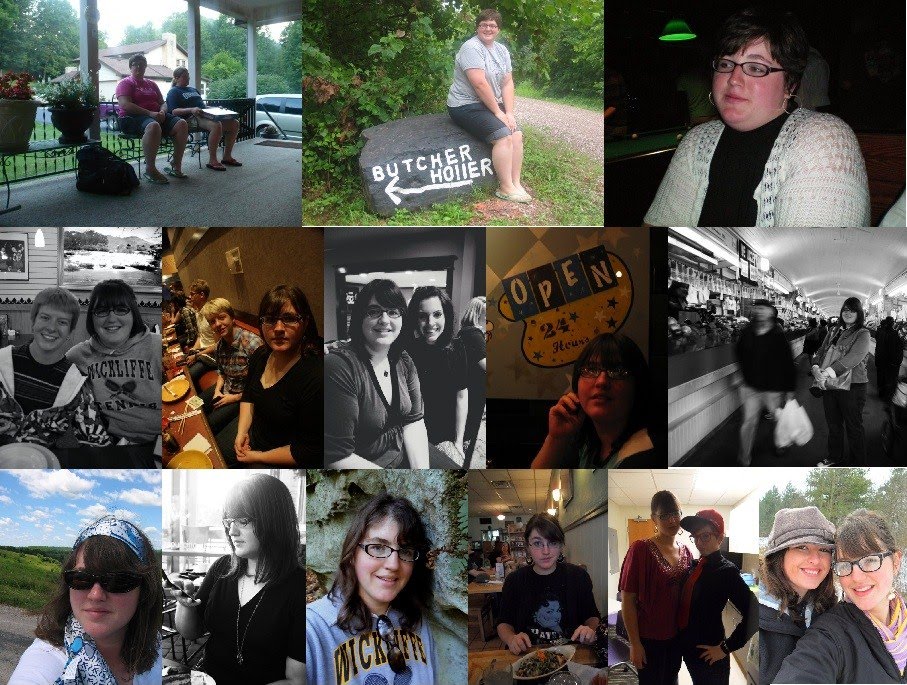
It has officially been two years, to this day, from the moment I decided I wanted to be a happier, healthier person. When I began writing this blog series I had good intentions of outlining how I did it, the nitty-gritty details if you will, but still in the form of a story. Because I am a naturally reflective, thoughtful person, I am having a hard time making it that simple. Drawing on the specifications, the exact changes I made, the foods I ate and the exercise I undertook is far too watered down for what it is I want to share with anyone who has known me for any amount of time and is reading this blog. If you’re one of those people, you know that change has become a facet of my day to day. You know that I now embody an entirely different person: physically, mentally, and emotionally. After spending a weekend at my mother and father’s house in Cleveland, seeing people I love and have known my entire life, I can only imagine what your perspective of me has become. It would also be completely unfair of me to omit certain portions of my experience, including what I am going through now: the struggle and heartbreaking difficulty of maintaining. Given my deeply embedded sense of nostalgia, of memories and of allowing the romance of the past woo me into the future, reflection will be the theme of this post. This is a glimpse into the day that began this journey, in celebration of the second anniversary of the first step.


Tuesday, February 24, 2009

Shrove Tuesday has always been one of my favorite days of the year. Beyond its more religious title it is nicknamed for a more cultural attachment which is spelled out for us in three letters given to this particular Tuesday—fat. A day of socially approved gluttony was like a gift from Heaven, literally in this case. This particular Fat Tuesday was beginning normally, like any other day in late February in Athens, Ohio.

Out the expanse of picture windows which glass plated the front of our house I could see drifts of snow sloping, heavily blanketing the stiffly frozen blades of green and brown grass left helpless from autumn. Large, puffy flakes were falling fast from the endless mass of heavily soaked gray clouds that hung wet above our home. That sense of nostalgic comfort that accompanies a blizzard like this in early December, anticipating the familiarity of another Holiday season, had long since passed and we were approaching the chorus, melodically speaking. We were entrenched in the bleakness of midwinter. Being a culture of people who always wait for the next big thing, getting through the slump of hibernation inducing winter weather isn’t easy. The day after Christmas is always anti-climatic, as the road that leads to Easter is long, and one could easily be lulled into believing, like Robert Frost, that there is no way out and perhaps laying down to sleep in pillows of snow will prove too enticing. These are the months we spend watching blizzards and ice storms come and go, knowing that an early, warm spring day will come, but with no guaranteed arrival date. So as I was on this day, we gaze out our frostbitten windows at the barrage of heavy, matted snowflakes crashing into the windshields of our cars, frozen in our driveways, and we wait.

However, thanks to some strategic spiritual planning, we have Fat Tuesday, stuck like a pin in a country road on the map between Christmas and Easter. Warming my fingers around a mug of freshly brewed coffee, snuggled comfortably in the aroma it sent creeping throughout my house, I looked down at the front of my neon orange hooded sweatshirt, marked in chocolate brown block by brilliant advertisers with the words “Cleveland Browns,” and like every other day, I acknowledged my more than average, too "uncomfortably full" to be "pleasantly plump" body. It was a given for me at this point. The world around me existed, literally, around me. There was nothing about my body image that touched fluidity, but rather rigidity in physical boundaries. My body required more space than other people's bodies. It had a greater presence, setting its own limits. In one of the cozy armed chairs in the front living room of our home, I pulled my feet up underneath me, curling and tucking my way into the warmest position I could endure. The lowest folds of belly fat careened over themselves and pressed deeply into my thighs as my body curled into the roundness that is required to imprison its own heat. Looking down at myself, thinking nothing exceptional of my body, but rather accepting it as known to me, I gently tapped my fingernails rhythmically against the coffee cup and tried to decide what to make of this day.

Our house on Columbus Road was very, very blue. The blue stretched from the room in which I was contemplating the morning, through a wood paneled door frame which led to a hallway, past and into a bathroom and around a corner to the sleepy blue, and cocoa brown bedroom where my partner was still tucked under the covers, asleep and unacknowledged of bitter chill. I’ve always been a morning person, and rarely did a day pass when she would wake to find me at home. She was typically greeted with a note, and a ceaselessly warming pot of what would be stale coffee by the time she roused to the kitchen. I had a pattern down, a sequence memorized, of where I could attempt to stealthily place my feet on the wooden floorboards so as not to evoke a creak or stir the furniture into the thunderous rumbling that would occur when I walked normally through the house. When I reached my side of the bed, where my clean clothes were stacked almost unrecognizably from my dirty clothes in the heap of a wardrobe that had developed on the floor, I swapped my love of the Dawg Pound for a slightly more fitted, certainly more insulated sweatshirt advertising the mighty terriers of Boston University. I left my sweatpants where they had been pulled off from my legs, and donned a pair of what I lovingly called “comfy” jeans, some heavy socks and my "way-past-their-expiration-date" Vans sneakers. My clothing reflected my body in shape, fit and my regard for them. T-shirts, hoodies, "comfy" jeans and worn out hipster shoes were normal, fitting loosely over me so the only confinement I felt came from the stretched surface of my own skin.

The decision I made while brewing over coffee and blizzards was to go to Kroger. Being unemployed, it was difficult to entertain myself while also feeling productive and spending the least amount of money possible. We did things like splurge on the larger cable package, play endless hours of board games and cards, and place food consumption and therefore also food preparation in a place of high importance to help with this constant dilemma. Food consumption was a major part of our day, not just because I loved to cook, but because we both loved to eat. Eating is a two-faced, back-stabbing best friend. While it reminds you constantly with stomach groans and hunger pains that you need it to stay alive, it in turn wreaks havoc on your body in so many ways if you don’t do it properly. For two unemployed people, my partner still being a college student, spending money on food was an easy justification. We needed to eat, or we’d die. Therefore, trips to Kroger were almost a daily occurrence, and spending guilt amounted to almost none. Being the consumer of culture that I was, I decided that being Fat Tuesday, we really ought to celebrate. I remembered that Kroger sold boxes of Paczki each year, and that is precisely what I wanted to plop in my cart, along with some fixings for Jambalaya, and indulge in upon returning home.

My family has had a Shrove Tuesday tradition that paints my memories as far back as they go. I have the fondest, warmest, treasured thoughts when I remember those snowy, dark nights that dot my past every year on Fat Tuesday in the dead of Cleveland’s often viscous winter. I yearn now for the feeling to which I had grown accustomed with my family. Those Fat Tuesdays were always so familial and communal, as we’d crowd together around a hexagonal shaped kitchen table, with fruited Spode place mats, and a rustic chandelier flooding the table in muted yellow. This was my Aunt and Uncle’s house, and every year they’d drive to Garfield Heights during the day to get a dozen tender, perfectly fried Paczki to share with our family.

I suppose this story begins with my Uncle George. While my Uncle George was an import to my family, gaining status as uncle, brother, son and friend when he married my Aunt Liana, he was never an import to me, as I was born many years after they’d been married. In my mind, he was nothing other than my Uncle, and when I was five years old, I believed that we shared the same blood, the same breath, the same inherent structure. This is what constitutes family to me. What I would come to learn and understand later is that my Uncle George was Polish, and Jewish, which meant little to me, because in my heart he was just Uncle George and I loved him, which in turn helped me think nothing of and love the differences between myself and others in my future. Our differences, however, are not the point of the story, for we shared far more similarities.

My Uncle George loved food and culture, and was broad minded enough to embrace and experience multitudes of both of those things. Being Jewish, my Uncle didn’t observe the religious tenants of Fat Tuesday, but being Polish, it was probably nearly impossible for him to escape the cultural tenants that anchor that holiday to the calendar. Even though Polish Jews didn’t eat Paczki on Paczki Day (Fat Thursday, or the last Thursday before Lent) or Fat Tuesday, they make, fry and eat them during Hanukkah, to honor the tradition of eating foods fried in oil. Paczki are Polish, period. They are essentially glorified donuts, round and fried, filled with fruit and dusted with powdered sugar or glazed. They have a historical purpose. They were made to use up the sugar, lard and fruits kept in the house, so that deeply devoted Catholics would not consume those foods during the Lenten fast. My Aunt and Uncle would go to Charles Peters Bake Shop in Garfield Heights, after having ordered them at least a week in advance, take a hand written number from a flimsy nail in the molding of the door frame, and stand in the line that often extended to the sidewalk, down the street and around the corner. They’d bring the boxes home, and that night we’d gather.

I remember my mother bundling me up, and together we’d climb into the car to often brave snow and wind, up and down what seemed like treacherous country roads at the time, on the fifteen minute trek from our little white house in the suburbs to my Aunt and Uncle’s cedar sided home, tucked deep in the woods down a long and winding driveway. While it was familiar and felt like home to me, it was also always an adventure and I’d often imagine for myself stories of the creatures that lived in those woods, the ghosts that dwelt within the pines, and the characters that inhabited such a different place than what I knew at our own house. Through the darkness we’d be warmly greeted by mellow garage lights, and a forest green door that inevitably yielded a welcoming Golden Retriever or two upon opening, and either my Uncle George or Aunt Liana, smiling and asking for our coats to hang. Below our feet was a grid of red clay tiles, grouted in dark gray, puddles from melting snow collecting in the grooves between them. The colors in the long kitchen reflected the surrounding nature, the forest; deep shale blue, gray, hunter green, Terra cotta, and deep walnut, all draped in the warming glow of the chandelier, and deeply set pot lights above the kitchen counters. The surfaces were decorated with Fitz & Floyd, and Spode ceramics, where vegetables had been turned rigid and glazed, and suddenly a bundle of asparagus would dust black pepper when overturned. It was in this place, the uniqueness of it, where I felt so unconditionally loved.

Here, around this table, my Aunts, Uncle, Mother, sister and I would sit. The Paczki each had been cut into quarters, revealing a great mystery of what filled each round, and we’d share, taste, talk, and laugh over pieces of tender fried dough smeared with prune, apricot, lemon, apple, custard, poppy seed, and raspberry fillings. We weren’t really preparing for Lent as much as we were celebrating one another’s company, our shared fellowship, our bond as family and lovers of culture and food. Thus began my love affair with prune Paczki, and with food, and specifically with the cultural relevance of food in general.

Being reared around such people, I could not escape this binding tie with food preparation and food culture, with love from my Mother’s kitchen, with trips to the West Side Market with my Aunts, and with sharing those experiences with others. That’s how I knew, on that day when I came home from Kroger with my half dozen of prune Paczki and then decided to throw them in the freezer, giving up dessert for Lent, that walked the path which began to lay out before me wouldn’t be easy. Sitting in the chair in my living room on that snowy day, I felt stuck, stationary and wedged into a life that didn’t really belong to me. There had to be more than the day to day living, more than the folds of fat that weighed heavily under my skin, the board games, the occupancy of time wasted. I lost my Uncle George in August of 2006 to leukemia. My beautiful family had spent too much time, too much energy expended, too much love given for me to sink into that sea. I was too smart and possessed too much burning potential to allow my feet to submerge any further into the wet concrete of my turbulent early twenties. No more looking out the windows, no more waiting for the next big thing. I had to save myself.


March 8, 2011

I thought re-creating that day might help inspire me. I have hit, without question, the hardest part of the process I'd outlined in my mind, thus far. On January 8, 2011, I stepped on the scale and saw the number 186 for the very first time. I had lost 101 pounds. One hundred was my goal, and I went flailing about my apartment, dancing up and down the hallway, clapping my hands and yelling for joy when I read it. That was the peak for me. Suddenly the anxiety and heavy burden I'd been carrying of working constantly on a seemingly impossible goal for almost two years had melted away. I'd made it. I had been anticipating this moment.

What I wasn't expecting was to gain back five of those pounds in the two months following that blissful day. While five pounds may seem like nothing to the average person who hasn't embarked on a weight loss journey, let me tell you, it's a source of major anxiety and disappointment. Many times in the past several days, I've thought to myself that I've created a monster. The diet and exercise I've incorporated into my life are my new sense of "normal," and no matter how much I want certain aspects of my old life back, I cannot have them without consequence. I have created a monster and now I have to live with it, and perhaps even more challenging, I have to love it.

While many people view great achievements as having a price, I simply can't look at it that way. I will learn to love this monster. Giving up my old food philosophy, my slothful habits and my need to cling to the familiar has not been a price paid, but rather a change that was necessary, a change that occurred and now it is a part of my life-a real transition. We spend our entire lives fearing change, then being flung to emotional, mental and physical polarities when we are faced with it. What I tried to do, and am still trying to do, is embrace change and learn how to manage it well, because at the end of the day, it is now and always will be a part of my life. Why have I gained back weight it took me two months to lose? Because change is inevitable and welcomed, and because learning how to balance the many facets of our lives is the moral of the story.

Learning how to maintain my weight where I have felt the happiest (between 185-187) is going to be a continual challenge for me. Over the past two years I've become intimately familiar with my body, scrutinizing it daily in the mirror, while changing my clothes, or sitting at my desk. I am keenly aware of it's shape, it's boundaries, it's nuances. I knew I'd gained weight back, even a pound or two, without ever stepping on the scale. My physical awareness is heightened, but that was necessary in order to overhaul myself into a healthy human being. I am working on finding a healthier way to look at my body again, without sliding back into an oblivion of hopeless obesity. I am slowly, painfully coming to terms with the fact that I will probably spend the rest of my life balancing in order to maintain. Some days that is a daunting thought, and others I try to remind myself of how far I've come, that I've done it before and I can do it again. I believe it will get better.

Where I find myself today is so drastically different than the story I told of this day (Fat Tuesday) two years ago. The person who wore that Browns sweatshirt, staring out the picture windows is a ghost that dwells in the dark spaces of my heart. Today the light is shining. Today I am in love: new love. Today I deeply know those I love and defend, and who love me deeply in return; they are no more than a handful, but I hold them tightly in my palm. Today I use my mind, my soul and my kindness on a daily basis to help others. Today I have a plan, I have ambition and my path will always lead to other paths. Today I am open-ended, I am eager for new experiences and the ability and desire to change and grow flows through me every single day. Today I am the healthiest I've ever been in my life. Today I have done everything I can to live. Today has never felt so good. Tomorrow awaits and I am more ready than ever for all of its magnificent glory. Amen.

01 March 2011

AmitiƩ

The thin, beadboard like hardwood floors of the hallway that leads from my bathroom to my bedroom radiated the warm, steamy fragrance of the crushed lavender blossoms that had been steeping in my bathwater. The floorboards almost bowed under my feet as I sunk into the cozy sauna that had been created in my half of a big white house on a charming village street. Every once in awhile, when I fall off the face of the Earth for an indefinite period of time, I need a little bit of genuine, self-inflicted comfort to help bring me back to life, awaken my senses again, and remind me that I still exist within the comings and goings, the business, the activity of every day life.

This particular night I had chosen lavender. If you hadn't noticed, I have been away from my usual blogging, from my weekly routine for a few weeks. If I have learned anything in my short twenty-four years on this Earth, it's that life happens and we must let it. In fact, there are times when we welcome life's arrival, because it means greater happiness, fulfillment and joy within our lives. The interruptions incurred on my usual schedule have been welcomed with open arms over the past six weeks. Exhausting? Yes. Procrastination? A definite result. Worth it? Undoubtedly. I decided last night that lavender was going to help bring me back down, to re-ground me and make me focus again.

The name lavender comes from the Latin verb "lavare" which means "to wash." Biblically it was known as "nard," and is mentioned in one of my favorite books, of which I've written before--The Song of Solomon. The Romans began the transition from nard to lavender as it was used commonly in their baths, as it was realized that lavender is good for the skin. I am a firm believer in the power of the mind, and the romance that lies in the connotation of lavender is right up my alley. Thoughts of it immediately draw up soothing sentiments, the smell of warm herbal tea, and for me, of onions and carrots sweating and softening in perfectly warmed olive oil, and the aroma of crushed Herbes De Provence seeping into the walls of my home. My soothing lavender bath, where I got back in touch with myself was an appropriate precursor to conjuring a big pot of French Lentil Soup, Queen Honeybea style, heavily seasoned with Herbes de Provence and reminiscent of friendship.

I have this friend, see. She's one of the best I've ever had. She is a self-identified Francophile, and for some time now I've been wanting to make this soup for her, after a candid discussion of Herbes De Provence over some dusty old books in a kitchy thrift store. Herbes De Provence is a simple mixture of some fabulously French and Mediterranean flavors: savory, fennel, basil and thyme. I learned recently that the addition of lavender to the mixture is purely an American nuance. I found that to be only appropriate for making this soup for my friend. French flavors with a little American twist; as if I stirred a portion of myself into the soup, which is always my goal when sharing my food with others. While I've been fairly preoccupied with the happenings of my own life lately, this friend always reminds me that I am cared for greatly.

It amazes me how taking time for myself actually makes me realize my humble place in life's greater picture. When I was finally presented with silence in the darkness of a warm bath, and my mind was free to relax, my thoughts went immediately to those I love. I haven't had much time to think about them lately, outside of work and life and life's little wonders and the stress of straining to see the future. Then I found myself alone, thinking of my dear friend who had just so happened to text me and say nothing more than "What happenin ladyyyy," which led to an entire conversation about the things that were making my life chaotic. She reminded me that I have human obligations to my friendships and my family, and that they aren't obligations, but rather privileges and blessings. So I steeped in lavender and thought excitedly about crafting my French Lentil Soup for her, and for me and for the people we love; about sharing fellowship and friendship, laughing and knowing we have more than just our own two feet with which to walk through life. Lavender and friendship have pulled me back to Earth for now, but I'm not so naieve as to miss chasing clouds when I can. I can only hope they will always lead me to vibrant purple fields of lavender, to friendship and to love. Bon AppƩtit.

Queen Honeybea's
French Lentil Soup
(Serves 6)

1 lb. of Organic French Green Lentils, sorted and rinsed
Boiling water
3 TBS. extra-virgin olive oil
1 large organic yellow onion, chopped
2 cloves of local garlic, minced
5 large organic carrots, peeled and chopped into 1/4" half circles
1 tsp. dried ground cumin
1/2 tsp. dried ground rosemary
1/2 tsp. dried thyme leaves
1 TBS. dried Herbes de Provence (with Lavender)
1 tsp. salt
1/4 tsp. dried black pepper
2 quarts organic, free-range, low-sodium chicken stock
3 large local red potatoes, peeled and diced to 1/2" pieces
1/4 cup dry red wine
Salt and Pepper to Taste
Extra-virgin olive oil for serving

1. In a large bowl, cover the lentils with at least 2 inches of boiling water. Let sit for 15 minutes, then drain. Set aside.

2. In the meantime, in a large stock pot, heat the olive oil over medium heat and add the chopped onion. Cook stirring often until onions are tender, translucent and sweating, about 10 minutes. Add the minced garlic, and cook stirring constantly for 30 seconds. Add the diced carrots, cumin, rosemary, thyme, Herbes de Provence, salt and pepper. Cook stirring frequently until the carrots are lightly tender and the entire house smells delicious, about 10 minutes.

3. Add to the pot the chicken stock and prepared lentils. Increase heat and bring to a boil. Lower heat and simmer aggressively for 30 minutes, stirring every so often. After 30 minutes, add the potatoes and the red wine. Taste for seasoning and add salt and pepper as needed. Simmer for 30 more minutes, stirring occassionally.

4. Serve piping hot. Drizzle additional extra-virgin olive oil over each bowl and serve with crusty French bread (baguette or galette).

10 February 2011

When the Mood Strikes


Just a quick post (yes, I said quick, believe it or not) to share a recipe and some photos of the fruits of my labor during a recent Indian kick in my kitchen.

It all started with black lentils. Over the winter holidays I discovered black lentils at the West Side Market in Cleveland. I'd never seen them before, and being intrigued and curious as usual, I went home with a bag. They've been burning a hole in my kitchen cabinet ever since, until yesterday when I decided to get them out for some much needed vegetarian protein. At least once a week I get a craving for some fabulous non-meat protein source, usually beans or lentils or tofu. My body doesn't love meat anymore, it loves fiber. Therefore...it was lentil time.

After perusing some black lentil recipes on-line, I decided to just boil the little buggers up and toss them with some sauteed Swiss chard and cauliflower. It wasn't until later, as I was perusing my DVD collection for something to entertain myself for the five minutes it takes me to eat alone in my living room, that I saw the case for the movie Slumdog Millionaire. Instantly, no joke, I heard the soundtrack playing in the back of my mind and remembered driving around Athens, Ohio on a hot, sweaty summer day with the windows down, playing "Paper Planes" by M.I.A. and "Jai Ho," as loud as my car speakers would handle. That is a fond memory for me, and suddenly my black lentils turned from plain to generously, lovingly spiced with coriander, cumin, mace, allspice, cardamom, and turmeric. Add that to a pot of boiling potatoes, drained and tossed into curry powder that had been warming in olive oil and my house soon smelled like Mumbai. Okay, not really, because I've never been there and while I'd love to think that all of India constantly smells of curry and cinnamon, I know I am wrong in that fantasy.

Dancing gleefully to the Slumdog Millionaire Soundtrack this evening, I took my pseudo-Indian feast from last night and turned it into something only about a thousand times better tonight. Being a fairly strict locavore, my body, mind and soul have been longing, pining, almost painfully missing fresh fruits and vegetables. One can only eat exclusively apples and turnips for so long. Therefore, I decided to cheat today. I think we all deserve a little cheat now and then. I stopped into Kroger in Marietta after work and picked up an organic, fair-trade mango, a bag of organic carrots, a box of organic mint, a bag of sweet, crunchy red grapes, and a bottle of Major Grey's Mango Chutney. I was going to India tonight in my little duplex set deep in Southeast Ohio, mark my words.

What became of these contraband items was a salad I'd readily make again. In fact, if I wasn't stuffed to my brim, I'd make another right now. I impressed myself with the flavor combination, and I only wish I had an army to cook for, so that I could share it with loved ones and friends. It was simple, healthy, and most of all, bursting with bright, zesty flavors that were reminiscent of spring, heat, humidity, summer, passion and fondness. Enjoy.

Queen Honeybea's
Mad Love for Lentils Salad
Serves 4

Ingredients:

A large bag of mixed salad greens (probably two good handfuls per serving)
A handful of micro greens per serving
2 large carrots, shredded
1 red onion, finely slivered
4 tomatoes, cut into eighths
A handful of red, seedless grapes per serving, halved
1/2 cup golden raisins, divided into 4 servings
2 large, ripe fair trade, organic mangoes, peeled and chunked
1/4 cup chopped fresh mint leaves, divided into 4 servings
2 cups cooked brown basmati rice (1 cup uncooked)
1 TBS. olive oil
1 TBS. rice wine vinegar
pinch of salt
4 cups prepared lentils of your choice (mine were black, cooked with spiced sauteed chard and cauliflower)
One recipe of prepared chutney-yogurt dressing (recipe follows)
A dollop of mango chutney per serving
Ground cinnamon
4 large whole-wheat pitas, warmed in the oven

To make said deliciousness:

On four plates, divide the salad greens equally for a good serving of salad per person. Top each serving evenly with micro greens, carrots, onion, tomatoes, grapes, raisins, mango chunks and mint leaves.

Toss the hot, cooked basmati rice with the 1 TBS. olive oil, rice wine vinegar and salt. Place 1/4 cup scoop of rice on each salad, then top with the dollop of mango chutney.

Beside the rice, bed down 1 cup of warm prepared lentils. Top with the chutney-yogurt dressing and sprinkle with ground cinnamon. Serve each salad with a warm pita.

To make delicious, nutritious chutney-yogurt dressing:

1 cup low-fat plain, organic yogurt
1/2 cup Major Grey's Mango Chutney
2 TBS. extra virgin olive oil
1/4 cup rice vinegar

Whisk all this yumminess together until you have a well melded dressing that's thin enough to pour over the salad. If it's too thick, add more vinegar.


Just in case you need some extra inspiration. This has been on repeat in my house.

06 February 2011

100 Miles or More: Part Three

Losing is the hardest part. We carry weight in so many different bags and baskets, slung over our shoulders and strapped up by our hips. Baggage is distinctly human, and we all carry our share. I found myself carrying the weight of the world that summer, on my body, in my soul and with every ounce of mental strength I had left. The forward progress I’d made during and shortly after my first steps through Lent had come to a halt, as my feet were planting into slowly hardening concrete under the weight of stress, heart-breaking pain, and heavy emotional casualty. As I was losing myself in the depths of despair, in the daily paranoia my life had become, I had lost the drive, the focus I’d been able to harness so well just months before.

What had changed was that the rock of my life then, that to which I’d been anchoring myself for almost four years of commitment and devotion, was slowly deteriorating. As I watched my partner spiral further and further into a dark, difficult abyss from which I wondered if emergence was even possible, I felt myself consumed with trying to hold dearly with white knuckles and clenched fingers to the life we'd built. It wasn’t working. I was holding onto weight alright—emotional, mental and physical and before I knew it I was sinking and drowning with lies, pain and loss stuffed like rocks into my pockets.

Losing weight has been a mastering of the mind for me. It has taken great focus, and dedication in order to relearn how to live, eat and move so that my body would match my desire to live. From June of 2009 to February of 2010, I probably lost all of ten pounds. I spent those eight months entirely focused on the health and well being of someone else. Two someone elses, in fact. I hadn’t a moment's reprieve to even remember that I had recently embarked on a weight loss journey myself. I was on a road that I believed would lead to a happier, healthier life, but for the moment I was stuck between a rock and a hard place, twiddling my thumbs on the edge of that lonely byway. Recently, I heard a piece of Buddhist wisdom that I found particularly relevant for this period in my life: “Roads are made for journeys, not destinations.

My road from two hundred and eighty-seven pounds to one hundred and eighty-five pounds has certainly been journey, rather than destination focused. So many things factored in my ability and desire to lose weight, and each changed my path in such a way that I never could’ve mapped the course by which I traveled. This has been the greatest lesson. Life happens, it always has and it always will. We can try as we might to control, organize and plan our steps, but life will always happen. What we can do, and what I did, is make decisions that will make the journey more bearable and to trust in the power of pursuing our own happiness.

In July of 2009, my Mother was diagnosed with Type II Diabetes. Therein lay a fork in my road, and this was one of the first places where my path began to change. Unsure of this diagnosis and without significant guidance from her doctor, my Mother was understandably bewildered as to how she would have to change her life in order to reach a point of good health again. Seeing my mother confused and perhaps a little afraid of the unknown drove me to a place where I had to sit down and learn about how food works, period. And it was not until I began slowly learning on my own, did I realize how little I knew, or rather, how little we all know.

After implementing a couple of diet changes for my Mother, I decided that as I was living with my parents at the time, I’d implement those changes to my own diet to help support and motivate her. Helping my Mother with this not only ended up significantly helping me, but it also gave me a distraction from the pieces of my life that were falling apart right in front of my eyes. This is where "dieting" became "changing my diet permanently." It was essential that my Mom be able to lose a little bit of weight, and to eat foods that were easier for a Type II Diabetic's body to process, in order for her to effectively reverse her diagnosis and be a healthier adult. What was our first lesson? That bread isn't the enemy, but that it likes to be paired with protein. What became our new favorite lunch? Brugger's whole-wheat bagels with peanut butter. That was the first step.

Helping my Mother with her diagnosis helped me to begin learning about how food is processed, and what we can eat that makes our bodies function and feel better. During that summer, we switched to whole-wheat and multi-grain breads almost one hundred percent of the time. We cut out dessert except for very special occasions, and the desserts we did eat if we were having a craving became a serving size of organic animal cookies, or a serving size of graham crackers. We always made sure our carbohydrates were balanced with lean protein. Arnold's Sandwich Thins became another staple, piled high with fibrous vegetables like shredded carrots, slices of cucumber, slivers of red peppers and micro green sprouts, lean turkey and just a slathering of light mayo. We became addicts for Kashi's Original Seven-Grain crackers, organic breakfast cereals with at least 6 grams of fiber, and the abundance of local fruits us lucky Clevelanders get to enjoy mid-July. Blueberries found their way atop bowls of Fiber One, raspberries and raw almonds made their way into tossed salads dressed lightly with olive-oil and vinegar based dressings, and we stopped eating yogurts that contained more than 10 grams of sugar per serving. We went Greek with our dairy, eating plain, 2% fat Greek yogurt with diced peaches and honey. We became vitamin guzzling, anti-oxidant rich, fiber consuming machines...and implementing these small changes a couple of times per week helped us both feel better and lose a little weight over those eight months.

By the time February of 2010 rolled around, I was reaching a breaking point. While my Mother and I had made some really great progress with our eating habits, I was not exercising regularly and still following my old routine of food consumption the majority of the time. My relationship was and had been essentially over in my heart. Because of how I had to handle and deal with that aspect of my life, I found myself under even more undue stress and anxiety within my family relationships. My body was on the brink of getting to a place where it could feel better, but I hadn't been able to push it over that hump. The train was spouting coal dust and puttering "I think I can," repeatedly as it chugged up that hill, but something had to change in order for it to reach the top. Fuel needed to be added to that fire, it needed to be stoked and I was the only one holding that heavy, iron rod.

On Fat Tuesday of that year, I stepped on the scale in the familiar green bathroom at the home of two people I used to know and love as my own family. The bobbing needle pointed two hundred and forty-five pounds at me. That was the last time I'd weigh myself on that scale, or set foot in that green bathroom. It was the last time I'd face the walls that were shaded with horrible memories from the hot summer before. Two days later, I broke. I ended the relationship I imagined would last forever. I took the reins of my life back, staring down the dark road before me, unsure of what would await at dawn. When morning finally broke, I found that I had a whole lot of time to focus on myself. I gave up dessert for Lent again to re inspire the ball I'd began to roll one year earlier. I began walking one and a half miles in the park every week day. I picked up a copy of Michael Pollan's book Food Rules: An Eater's Manual, and read it cover to cover in two hours. I picked myself up, put one foot in front of the other, and never looked back.


November 2009


December 2009


February 2010

And a special thanks to Anna Zimmerman for always taking photos of me. I'd have no way of sharing pictures with the world if you hadn't been snapping them for me.

26 January 2011

The Luckiest

"There's nothing like poverty to get you into Heaven. They got a lot of wine and fish up there, and the bread is unleavened. They got a lot of ears that heard a whip go crack, lots of missing toes and fingers and scars upon their backs. Daddy's been working too much for days and days. He doesn't eat. He never says much but I think this time it's got him beat. It isn't that he isn't strong or kind or clever. Your daddy's poor today and he will be poor forever."
-Patty Griffin, A Poor Man's House.

Tucked cozily into a straight-backed bar stool at a hand crafted wooden counter, I scribbled down words inspired by a glorious winter walk while I waited eagerly for the waitress to round the corner with my morning meal at The Village Bakery last Sunday morning. After spending an hour sleepily lulling about a wooded, creek guided trail through dusty snow that glistened up the rays of a rare January sunrise, the butter yellow walls and warming glow fueled by happy diners and wall ovens were more than welcomed. While defrosting my left hand around the comforting curvature of a red mug full of Snowville swirled, organic coffee, my right hand was wielding it's usual black ink pen, writing about love. It is romantic to me to hearken the voices of the transcendentalists, tread out into nature and hear the words for myself; inspirational to say the least. While the smell of sharp, melting local cheddar and sizzling scrambling eggs swirled about me I found myself eaves dropping on the loud conversation to my left, interrupting the flow of my day, between a father and his newly minted Bobcat daughter.
"You don't know how lucky you were, kiddo. Trips to Europe, a new car when you turned sixteen, always getting new clothes and handbags."

This comment made by the girl's father came about ten minutes into their conversation about Athens, college-towns, and alleged hippies. It came about five minutes after they discussed how he didn't know how students survived before the uptown appearance of Chipotle. It came just seconds after he said, "When I was a student at the University of Dayton, there was a college nearby called Antioch. That's where all the weirdos went." It was the comment about luck, however, that hit a nerve within me. Until that point, I was able to retreat into my Cancerian shell, turn off the world around me and delve happily, quietly and alone into griddle cakes and my own thoughts. As soon as my ears noted this particular comment, the switches to my analytical nature were tripped, and I wrote in all capital letters on the top of my earlier scribbling: "What makes a life, a person, an experience 'lucky'? What defines 'luck'?"

Within the context of the situation, it was hard for me to digest the fact that this pair of people were sitting in a locally-owned, locally-operated, food conscious cafe, plagued and ridden with people that probably, based on fundamentals and personal codes of ethics, fell into the previously mentioned category of "hippie" and "weirdo." In fact, they were sitting next to me and while I fit nicely into what the man obviously considers an acceptable social appearance, despite my lack of dreadlocks and body odor, I fundamentally agree with many people who self-identify as "hippies." I self-identify as a hippie.

This morning while reading a chapter in Barbara Kingsolver's Animal, Vegetable, Miracle: A Year of Food Life, this weekend scenario began to replay in my mind. In the chapter I was reading, she began to explore the divide between our unofficial American caste system, or rather the classist division of urban and rural. I know into which caste my breakfast neighbors fall. It is the same one into which I fall: the urban middle-class. However, my hippie friends, and my farming friends (many of which claim both those identities) often fall into the socially deemed "lower" of the classes: the rural poor. While the three of us were sitting over pairs of whipped local eggs, handmade biscuits with locally milled flour, and thick, smokey pieces of bacon from a notoriously local family farm, we were actually caught up in the flavors, the texture, the grit of the cause; we were eating food, and food is ensuring a chronic separation of two Americas- the rural and the urban-and more importantly of Americans themselves, more and more each day.

Barbara says of the modern American farming industry...
"...as the years have gone by, as farms have gone out of business, America has given an ever-smaller cut of each food dollar (now less than 19 percent) to its farmers. The psychic divide between rural and urban people is surely a part of the problem. "Eaters must understand," Wendell Berry writes, "that eating takes place inescapably in the world, that it is inescapably an agricultural act, and that how we eat determines, to a considerable extent, how the world is used." Eaters must, he claims, but it sure looks like most eaters don't. If they did, how would we frame the sentence suggested by today's food-buying habits, directed toward today's farmers? "Let them eat dirt" is hardly overstating it. The urban U.S. middle class appears more specifically concerned about exploited Asian factory workers." (pg. 208, Animal, Vegetable, Miracle: A Year of Food Life)

America's supposed "upper" classes are, by their food choices, nourishing rural poverty. In a country where patriotism runs high and mighty, where red, white and blue are practically bled from the veins of American citizens, the upper and middle classes are monopolizing against the history and tradition of American family farming; against agriculture, the first and largest industry in America's life story. Every meal we purchase at McDonald's is slowly killing one family farmer after another, turning the rural poor into the untouchables. Barbara illustrates how this is happening in a passage about corporate grocery stores purchasing locally grown, organic tomatoes in mid-August in rural Appalachia:
"...when the farmers were finally bringing in these tomatoes by the truckload and hoping for a decent payout, some grocery buyers backtracked. "Not this week," one store offered without warning, and then another. Not the next week either, nor the next. A tomato is not a thing that can be put on hold. Mountains of ripe fruits piled up behind the packing house and turned to orange sludge, swarming with clouds of fruit flies. These tomatoes were perfect, and buyers were hungry. Agreements had been made. But pallets of organic tomatoes from California had begun coming in just a few dollars cheaper. It's hard to believe, given the amount of truck fuel involved, but transportation is tax-deductible for the corporations, so we taxpayers paid for that shipping. The California growers only needed the economics of scale on their side, a cheap army of pickers, and customers who would reliably opt for the lower price." (pg. 211, Animal, Vegetable, Miracle: A Year of Food Life)

Buying organic produce in the grocery store is certainly taking a step in the right direction as far as your health is concerned, but where your community is concerned, buying locally produced goods becomes the determining factor between a home-cooked meal and a trip to the soup kitchen for many family farmers.

It is not that the rural poor wish to become the urban middle-class. After stewing over the idea of luck, and what it means to be lucky for some time, as well as reading this particular chapter of Animal, Vegetable, Miracle: A Year in Food Life, I believe you'd find that the rural poor consider themselves lucky, and that luck is defined and determined solely on our rearing and raising. One does not need trips to Europe, new clothes, or handbags to be "lucky." One doesn't need a new car or any of the other socially deemed "privileged" experiences to consider them self "lucky." That notion of "lucky" exists only in the minds of those who also consider themselves the "have mores," who recognize their status as middle, or upper-class. If I asked my friends who own, work and tend a dairy farm, whose milk is locally processed into half-gallons, into cream, into cheese and yogurt whether or not they felt "lucky," I imagine their answer would involve something along the lines of "We feel lucky every day that we wake-up with our feet on the ground and our livelihood still living." I believe those who we categorize as the "rural poor," (a category which includes many American family farmers) in fact think of themselves simply as being who they are, and every day that they can continue to be who they are, they find themselves steeped in the wealth of luck.

I wish that every Ohio University student who finds them self to be of the middle and upper class, thrown suddenly into rural Southeastern Ohio, who found them self out for breakfast with their folks that Sunday morning of the annual "Parents Weekend," would have eaten at The Village Bakery. If all of us who "have more," could spend our "more," on locally produced food products, it'd be the greatest oath to our nation we could take, it would be an act of great patriotism. We're Americans, our country was carved by plow, driven by tractor and agriculture fed the passing of knowledge, the building of family, the fellowship of community. Even though we also have an industrial, corporate history, we must never forget that even within those contexts we are still a nation of individuals. Ford doesn't pay the bills of the assembly line worker in it's Detroit plant We do. We pay that worker. We're the consumers, and we ought to be smart, caring, compassionate consumers.

Visit a Farmer's Market, buy a locally produced jam, join a CSA, buy locally raised meat once a week, buy eggs from the farm up the road, buy local honey, eat local apples, use pure maple syrup tapped from trees just miles from your house, find a locally owned and operated bakery, and most importantly, if you find yourself in a position that allows you to do any of those things, then count yourself as the luckiest.

(One final note, because sometimes I can't help myself: If you're one of those Americans who is so concerned about illegal immigration from Mexico, if you want to build the fence, if you so desperately want to keep "them" out, then you should probably stop buying produce from the grocery store. You're ensuring that "those people," have a job. Someone has to pick those cucumbers for less than minimum wage, then they have to be shipped to where you live using your tax dollars, in order for you to buy them for next to nothing. Just saying.)

19 January 2011

Vittorio's Boun Appetito


Home. Every once in awhile it takes a little more than the physical place itself to make that word resonate within me; to transform it from a word to a feeling, a quiet vibration that hums through my soul and bones. While I spent two days humbled by the presence of the place I call "home," it wasn't until I found myself seated at a familiar table in a restaurant I've been intimately acquainted with for years, did I find myself glowing, singing softly the intensity of "home."

Cleveland will always be my home. My knowledge of the world through the wide lens of Northeastern Ohio is like graffiti on the walls of my heart. The gritty chip of a city deemed nationally miserable, regionally depressed, and locally beloved sits proudly on my shoulder. There is so much more to Cleveland than gray clouds, hard winters and seemingly bitter people. Like every other city in America, Cleveland has a living, breathing culture that penetrates it's city blocks, stretching roots out to the suburbs, and implanting itself in those of us lucky enough to call ourselves "Clevelanders."

There was a time in it's history when Cleveland was a booming industrial center. The now almost century old Terminal Tower shined bright, new, and clean over a city situated perfectly for shipping and trading by sea and land. Cleveland was a destination for domestic and international immigrants alike. Like Detroit, it was a temptation for the gleaming, weary eyes of tired, poor Appalachian farmers looking for better, more productive ways to provide for their families. And like every other booming American city, Cleveland was the recipient of an influx of international immigrants looking for the same things. My Italian grandfather's appreciation of his life in America is something I will never forget. It fuels my patriotism, and further entrenches my heavy cultural ties, knotted to Italy and Slovenia forever.

My grandfather wasn't the only Italian immigrant to call Cleveland home. According to Ohio History Central...
"In 1870, only thirty-five Italian immigrants resided in Cleveland. By 1920, their numbers had surged to more than twenty thousand people. Most of these immigrants found low-paying jobs in factories, as day laborers, or as waiters, waitresses, and cooks in restaurants. Immigrants who were more successful established businesses that supplied their fellow migrants with traditional Italian products or began their own clothing or construction companies. In Cleveland, the Italian immigrants tended to settle in their own communities, preferring to live among people who shared similar cultural beliefs and spoke the same language as they did. By the late 1800s, most Italian immigrants in Cleveland had settled in two neighborhoods nicknamed Big Italy and Little Italy. Most of these immigrants were followers of the Roman Catholic Church."

They came in droves. For me, this meant not only my existence as a human being, but also my roots forming and growing in a city steeped in cultural diversity. It is hard for me to view the world through lenses that aren't tinted with that diversity. My entire understanding of my cultural identity is based on an immigration culture that helped create, paint, and write the majestic city from which I proudly hail. This is precisely why "home" is so much more to me than just the house where my parents live, more than just my parents themselves.

One of the communities where Italian people settled in the early twentieth century was the community where I grew up. An Eastside suburb of Cleveland, Wickliffe was an ideal place for many of these immigrants to settle. It was in perfect proximity to many different employment opportunities, it was accessible to Cleveland by street car, and it was a small, tight knit place with good public schools and promises of a beautiful American life. My mother's family settled there along with several other families from close, similar communities in Italy. Lisa Salotto, the owner of Vittorio's Buon Appetito restaurant in Wickliffe, is from one of those other families. Our familial histories have been intertwined for more than one generation now, and that connection is evident every time I sit down at a table in the utter perfection that is the presence and energy of her Italian restaurant.

This past Saturday night my parents, Uncle and I enjoyed a soul nourishing Italian dining experience at Lisa's charming restaurant. Two dining rooms are dimly lit by sconces, and columns wrapped with glittering strands of tiny clear bulbs. The cozy mocha walls warmly reflect the simple elegance of stark white table cloths and glasses of swirled, breathing red wine. A play list of Italian-American favorites, highlighted by the Rat Pack was just barely audible, as background mood music ought to be, so that conversation can flow, engage, and rise to fill and warm a room. The words spoken at our table over tenderly sweet, flour dusted homemade rolls and a dish of pungent aromatics soaking in pungently smooth olive oil were shared with love, as nothing else can result from such surroundings.


The food at Vittorio's is picturesque, and unlike the cover of Food & Wine or Gourmet Magazine, it's actually there in front of you filling each of your senses with something uniquely Italian-American. I ordered a bowl of what I feel to be, by far, the best Italian Wedding soup I've ever eaten. There is nothing superior to the fullness of the broth, the juicy pieces of chicken, tiny quaintly spiced meatballs and a handful of al dente pastina. This is the soup I want to be fed with care by someone who loves me greatly when I am sick, covers pulled up to my waist, sitting up in bed with a runny nose; it is medicinal.


I followed that by ordering Eggplant Roulades as my entree. Wafer thin slices of grill-marked, smoky eggplant doused in oil and herbs found themselves wrapped around rich, creamy, salty Italian cheeses and baked happily on a bed of nothing less than ancestral marinara. A glass of Merlot and the opportunity to look into the eyes of three people who love me unconditionally, to make conversation with them and share a few moments sharing our lives, and my soul found itself humming the sounds of home.


If you find yourself on the Eastside of Cleveland and you're craving just such an experience, a plate of Vittorio's pork parmigiana, a glass of wine, or just the feeling of being at home, then I highly recommend you step into Vittorio's for a round or two of Frank Sinatra and good old fashioned love, done Italian-American style. Buon Appetito. Enjoy.

14 January 2011

100 Miles or More: Part Two

Temptation is the furthest thing from a simple joy. Temptation cannot exist without consequence. While not all consequences are bad, without careful thought and patience they will be. We are undoubtedly the writers of our own sagas, the wielders of pens that scribble out the narratives of our daily lives, we are creators. We must create good consequences for ourselves. When I found myself sitting down to write this next chapter of my own story, I found myself contemplating temptation and consequence existing as a cause. I have never faced temptation without seeing the bad consequences and creating the good shortly after. Grappling with temptation has been a cause for me, and where there is a cause of something there exists an effect and for me, a subsequent solution.

McDonald’s would like you to think that temptation is just a simple joy. I have been so bothered recently by their latest ad campaign for their chicken nuggets. A ridiculously good marching band drops from formation, one by one, tempted by bags and bags of McDonald’s chicken nuggets. We are in an economic recession, and we’re retreating to simple, to basic, to the uncluttered. We are retreating to joy as a source of pleasure, rather than the pleasure money used to buy for us. McDonald’s knows this, and they want you to believe that the temptation you feel at the sight or smell of a box of chicken nuggets is a simple joy. Not, of course, that the food itself is a simple joy, because even the advertising executives at McDonald’s know that is so far from reality they couldn’t sell it in a ad, but rather the temptation of the aroma of day old grease and manufactured, frozen pieces of batter-slathered chicken chunks. Temptation is the name of the game when it comes to America’s relationship with food. We are a country of excess, where we can eat almost anything we want, anytime, and yet we still need to be tempted?


Watching this commercial, I cannot help but think of the first days and weeks spent on my journey to improve my health. Like any other great journey, I learned as I went. Lewis and Clark had no idea how many supplies they’d need to head into an uncharted wilderness of unknown expanses. They didn’t know how far they’d go, how long they’d be gone or what they would face. The first few weeks, I imagine, were spent learning how to live, to function and simply exist on their journey. They stumbled and faced uncertainty. They reached for help in order to help themselves. Those first few steps are precarious and can transform the feet, yards or miles that lay ahead of you. Temptation dwells in my shadow, just where the hue turns to black and I can feel its presence close to me. It has always been and will always be there. I spent those first few weeks learning that I cannot face what I cannot see. I could not outwit what I did not understand.

I had lost seven pounds during the course of Lent in 2009. That Easter Sunday was transfiguring for me. While I certainly enjoyed the cakes and pastries of my family’s traditional celebration, I saw them in a new light. I was exalted for the first time, out of a place where I felt powerless over my health and my body, and raised to a place where I could see myself more objectively. Those weeks of keeping my Lenten promise had proven to me that I not only had control over my body, but they proved to me that I wasn’t treating it well. It was made absolutely clear to me that the simple joy I found in decadent sweets was disconnected from my body’s actual physical experience of nourishment from them. My body did not enjoy them, my brain did. Just like the gender roles I’d spent so many hours reading about and studying in college, my affection for dessert was nothing more than social, cultural construction, as was my guilt over eating it.

I had spent those first few weeks beginning to tear down the siding, breaking out the windows and removing the shingles of the building that represented my desire for and the satisfaction I derived from certain foods. I realized that perhaps all of my life I’d been told that dessert is at once a temptation, a source of privilege, and therefore something I should desire. The place held by dessert in our culture is more than evident in the language that surrounds it. Marie Antoinette told angry, impoverished, starving French peasants to eat cake when there was no bread. Dessert is saved for last, because we are led to believe it is the best part of the meal; that is has more value than the other portions of the meal which serve only a nutritional purpose. Stressed is desserts spelled backward, don’t you know? Dessert after every meal is still seen as a measure of wealth, and the lack of it a shameful mark of poverty. I was never eating cake because I needed the sugar for a boost of energy. I was never eating pie because I thought I could use another serving a fruit that day. I never ate one or two cookies for a quick snack when my stomach was rumbling. I was eating dessert because my gluttonous American mind believed it to be measurable, as though it added to my substance, my personal value, and paid away some of my anxiety.

I was slowly beginning to learn how what I put into my body correlated with the way my body and mind felt. While my body bears and displays the physical changes I’ve made over the past two years, my mind bore the brunt of the revolution. The construction of guilt is another piece to this puzzle. Our common relationship with food is so far off of what is natural and normal for human beings that we crave what we do not need, then wrecked with guilt for eating it. Guilt, like temptation exists with both good and bad consequences. It has taken me the entirety of my journey to build a healthy relationship with guilt. For those first few weeks, developing this relationship was my constant battle. Walking for fifteen minutes inside my house everyday was a great challenge and I had to develop such a fine tuned sense of guilt that I wouldn’t—no, couldn’t not do it. I had to teeter past the opposite edge of a healthy relationship with guilt, and I had to have the self-control to manage it without falling off the cliff. While most of my friends and family would assure me that it was okay for me to skip a day of walking, or it was okay for me to eat a big piece of pie, I absolutely had to believe that it wasn’t okay…and then I had to keep myself from developing a mental disorder. It is a game to learn, a fine line to walk, and it is far from easy. It is more than just a lesson learned in honing self-discipline. It is actually doing just that—mastering self control.

As the spring of 2009 carried on, as days got warmer and short hikes and walks outside became more accessible, my partner and I would venture outdoors for exercise. I lost another eight pounds by learning my way through temptation and guilt, through self-control and over-indulgence, by eating the foods I’d always eaten, but in moderation instead of excess. We were planning on moving home, settling, working and making a life for ourselves. In May of that year, everything seemed to be soaring. I was drifting on cloud nine, and my spirit was going nowhere but up. What I didn’t see then was the imminence of summer’s thunder, of heat and lightening, of a slowly developing hurricane that would change my life.

The following is a recipe from that time in my life, to give you an idea of the beginning of the changes I’ve made to my diet. While I probably wouldn’t make it this way anymore, I would modify this recipe again to fit my lifestyle now, and I may just do that. This salad was inspired by the grilled chicken salad from Sonic. There was something so delicious at the time about a heavy onion ring atop a bed of greens and grilled chicken coated with melting cheddar cheese. This was my “healthy” re-invention, circa Spring of 2009. While this is probably not the healthiest recipe I’ve ever created, it was what was working for me at the time. Slow and steady wins the race, and this is a vast improvement from the salad from Sonic itself, for my body, my wallet and the local economy. Enjoy.

Revamping our favorite Sonic Salad
Serves 4

2 large boneless, skinless chicken breasts
2 TBS. good honey mustard
1 TBS. apple cider vinegar
½ TBS. olive oil
Dash of garlic salt
Dash of black pepper
One medium sized head of romaine lettuce, chopped
A hefty handful of mixed mesculin greens
Eight strips of turkey bacon, microwave cooked until crispy
2 hard boiled eggs, peeled and sliced
Two avocados, chunked
One package of grape tomatoes
Two large carrots, shredded
One red bell pepper, finely diced
½ cup of raw almonds
4 oz. shredded, local Cheddar cheese
One recipe of Ellie Krieger’s Oven Baked Onion Rings
Newman’s Own LIGHT Honey Mustard Dressing

1. Start by getting the chicken ready. Heat a large skillet coated with cooking spray over medium-high heat. In a small bowl, whisk together the honey mustard, cider vinegar, olive oil, garlic salt and black pepper. Cut the two chicken breasts in half length wise, leaving you with four thin pieces of chicken. Brush them with the honey mustard mixture and cook thoroughly in the heated skillet, turning once, about 5 minutes on each side. Remove to a cutting board to rest and cool slightly, then cut into strips for the salad.
2. In a large bowl, or on a large serving plate, pile the lettuces, bacon, eggs, avocado pieces, grape tomatoes, carrots, pepper, and almonds. Top with the slightly warm chicken, then top the chicken pieces with the shredded cheddar. Then top with the oven-baked onion rings. Serve and dress individually with the dressing.


April of 2009, seven pounds lighter and already happier.